Electric or a petrol 125?
The most honest difference is not one you have to feel — it is printed in the data sheets on both sides. An electric motor delivers full torque from the first revolution. A petrol 125 reaches its maximum torque only between 7,750 and 8,000 revolutions per minute. At the lights the petrol bike is therefore sitting in the worst part of its curve and has to clutch, rev and shift. Electric, all of it is there from a standstill.
No shifting, no clutch, no power gap. Every model here is single-speed.
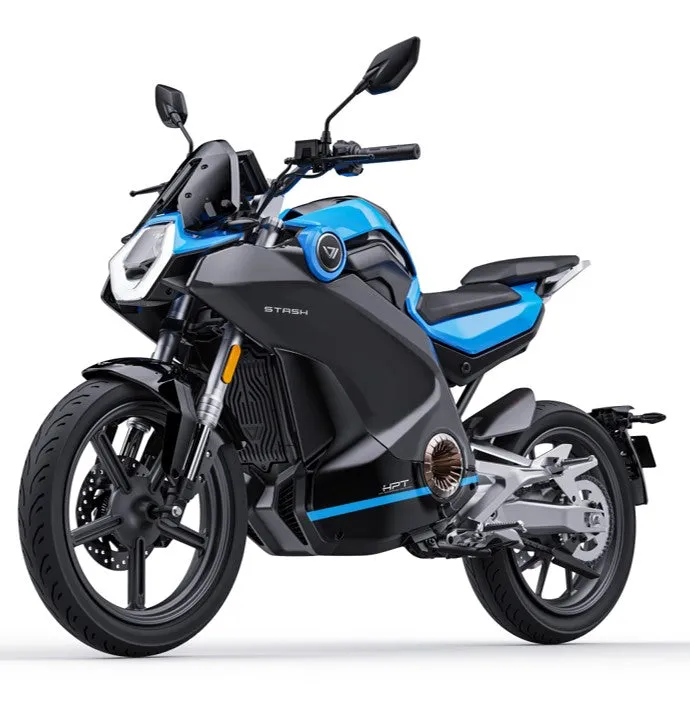
We only put that in seconds where a manufacturer figure exists: the Vmoto Stash goes from 0 to 50 km/h in 3.7 seconds according to the manufacturer. For the other models the manufacturer publishes no acceleration data at all — and we do not invent any.
For scale, measured rather than estimated: petrol scooters of the 125 class need 14 to 21 seconds to reach 80 km/h. That is the full measured spread from an independent GPS test series covering 13 scooters of that class.
And a word on torque figures, because they get compared wrongly so often: the values quoted for electric machines are torque at the wheel, after reduction. A petrol data sheet quotes torque at the crank, before the gearbox. Setting the two side by side would be dishonest. The real advantage is not the bigger number — it is that the number is there from the first revolution, in a single ratio, with no pause to shift.
Rpm figures: manufacturer data sheets for common petrol 125s. 0–50 km/h: manufacturer figure, Vmoto. 14–21 s to 80 km/h: independent GPS test series (motochecker.at), 13 petrol scooters of the 125 class.