The 45 km/h class · As of August 2026
45 km/h. Your car licence is enough.
This is the least complicated way to get through a city on electricity: licence class AM already sits inside your car licence, an insurance plate replaces registration, and there is no periodic roadworthiness test. Here is every model in the class — from the entry machine to the top of it — plus the three questions that come first: licence, speed, cost.
Licence: class B is enough. Class AM is included in it — no extra exam, no course, no waiting.
Which licence? The one you have.
Scooters and moped bikes up to 45 km/h are vehicle class L1e, covered by licence class AM — and AM is automatically included in class B, as it is in A1, A2 and A. If you hold a car licence you get on and ride: no extra exam, no course.
Without a car licence, a standalone AM licence works from age 16.
The paperwork stays light too: an annual insurance plate replaces registration, and no periodic roadworthiness test is required for this class.
Guide: which licence for which e-scooter? →
Is 45 km/h too slow? Measure it against real city traffic.
The urban speed limit in Germany is 50 km/h, so a 45 km/h machine runs at 90 per cent of the limit — and the limit is not what traffic actually moves at.
Real traffic flow in large German cities sits well below it, roughly between 17 and 38 km/h depending on the city and the hour. On the last mile into the centre it averages 21 km/h in Munich and 26 km/h in Berlin; during the 4–5 pm rush hour, traffic data records 17.3 km/h in Frankfurt, 17.7 km/h in Berlin and 20.3 km/h in Hamburg.
In city traffic a 45 km/h machine is therefore not the slow vehicle. It is the one that does not sit in the jam, never hunts for a parking space, and leaves first at the lights.
The honest limit: where 45 km/h genuinely holds you back is the open road between towns. If that is your route, the next class up is the right one.
Traffic data: INRIX city figures, via Statista.
One class up: 80 to 95 km/h →
What does it cost a month — against a transit pass?
Start with the ticket: the Deutschlandticket has cost €63 a month since January 2026, the student version €37.80 from the 2026/27 winter semester.
Now the scooter, calculated conservatively: spread our cheapest model at €1,799 over 36 months and it comes to about €50 a month. Add the insurance plate — third-party cover runs roughly €45 to €100 a year depending on insurer, age and no-claims history — and the electricity, which stays in the region of a few euros a month for city journeys.
The honest conclusion: against a subsidised student pass a scooter does not win on the price tag. It wins on time, on independence, and at night when the timetable thins out. Against the full Deutschlandticket the two sit close together, and the decision turns on whether your route fits the stop or the stop fits your route.
If the purchase price is the obstacle: we offer 0% financing over a maximum of 12 months.
Ticket prices: 2026 and winter semester 2026/27 respectively. Insurance premium depends on insurer and tariff.
Scooter or moped bike? The difference is the posture.
Technically the two body styles barely differ in this class: same speed, same licence, similar prices. What differs is how you sit — and how you read.
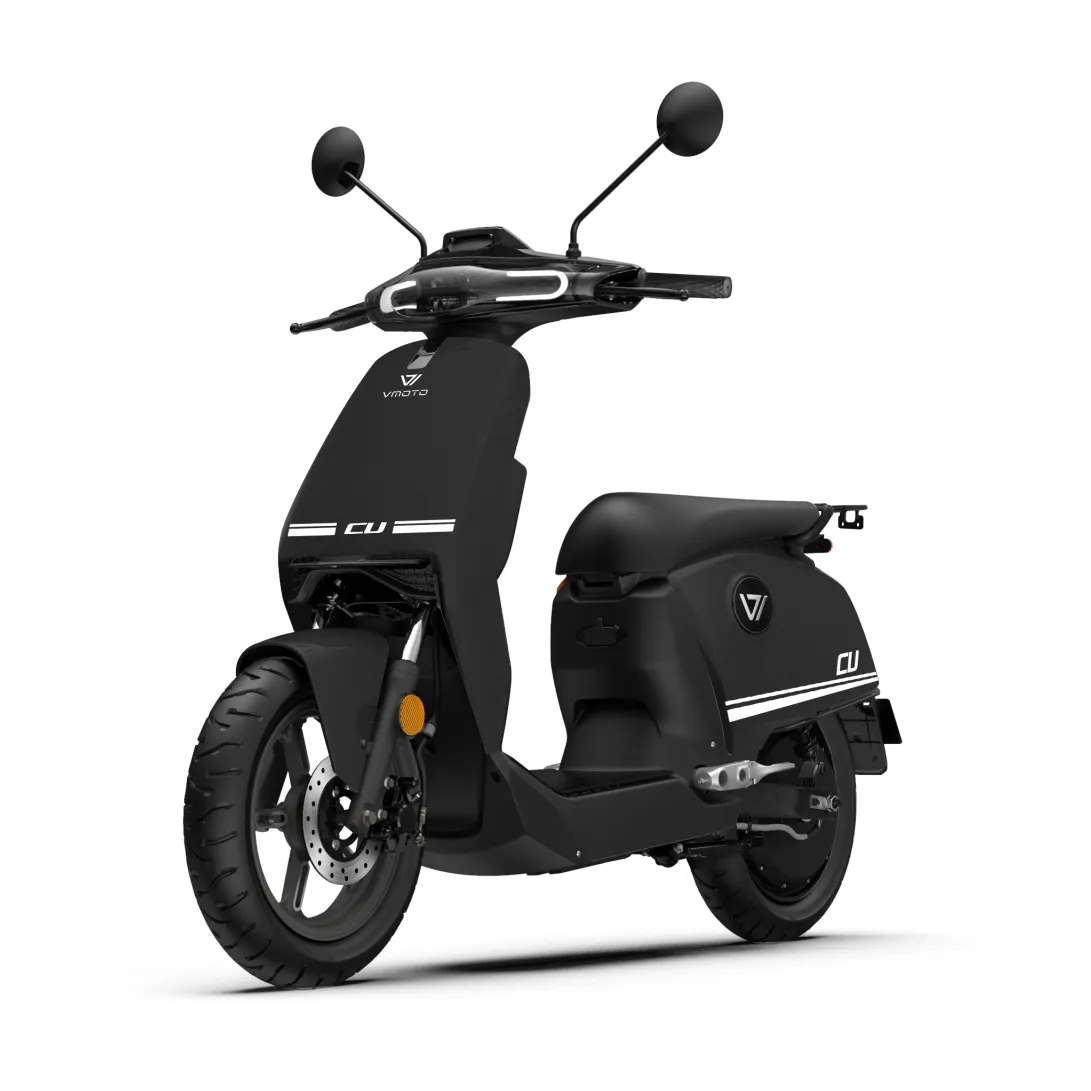
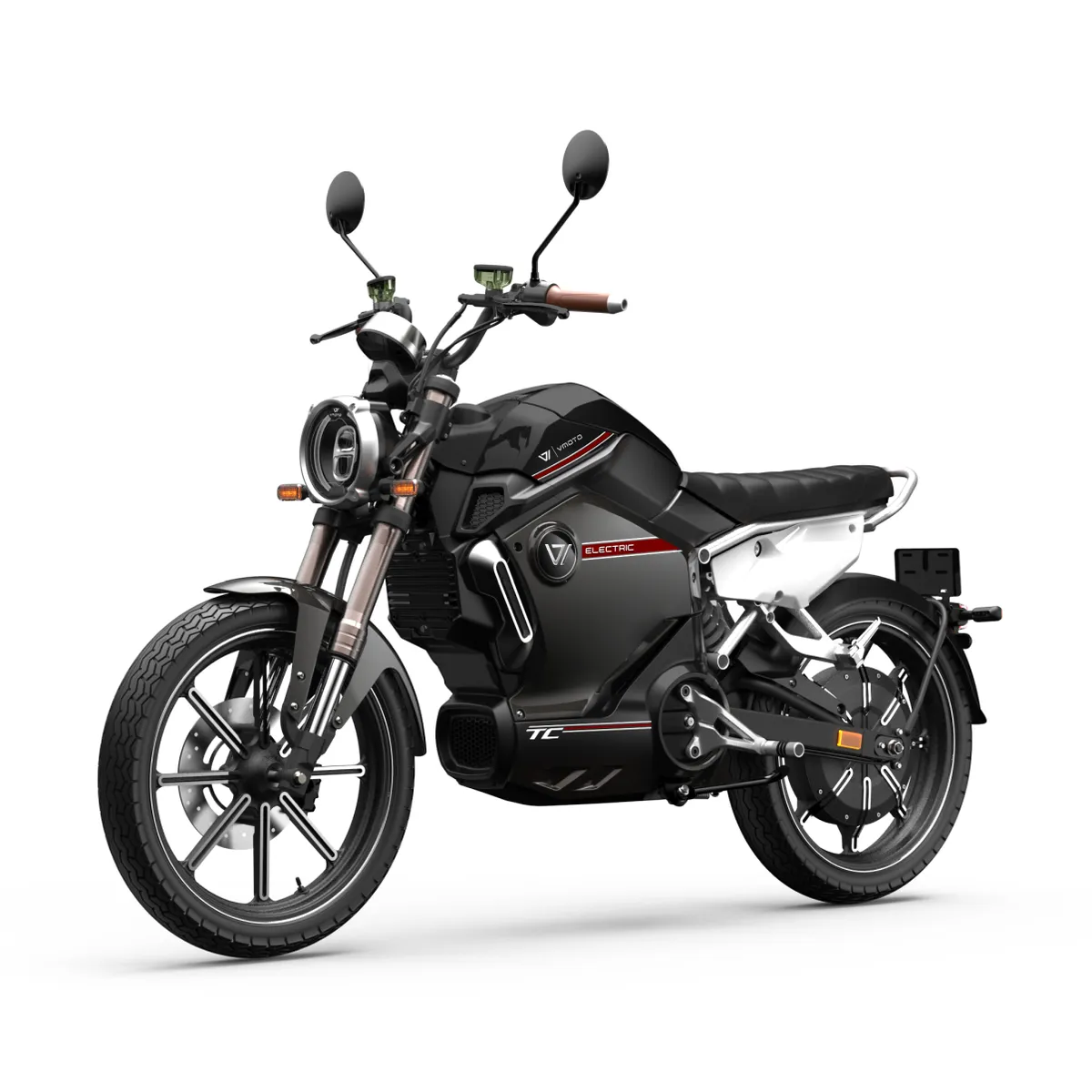
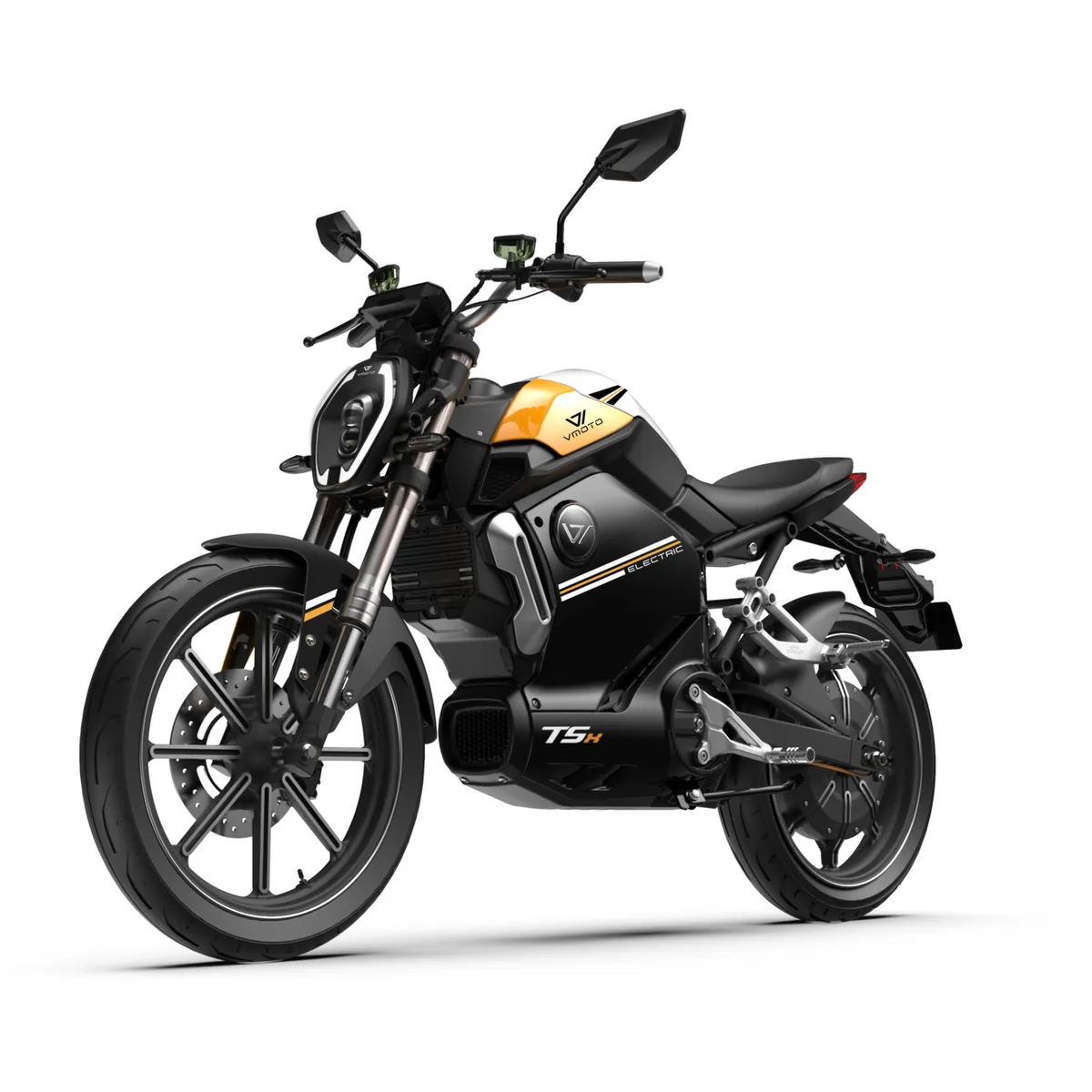
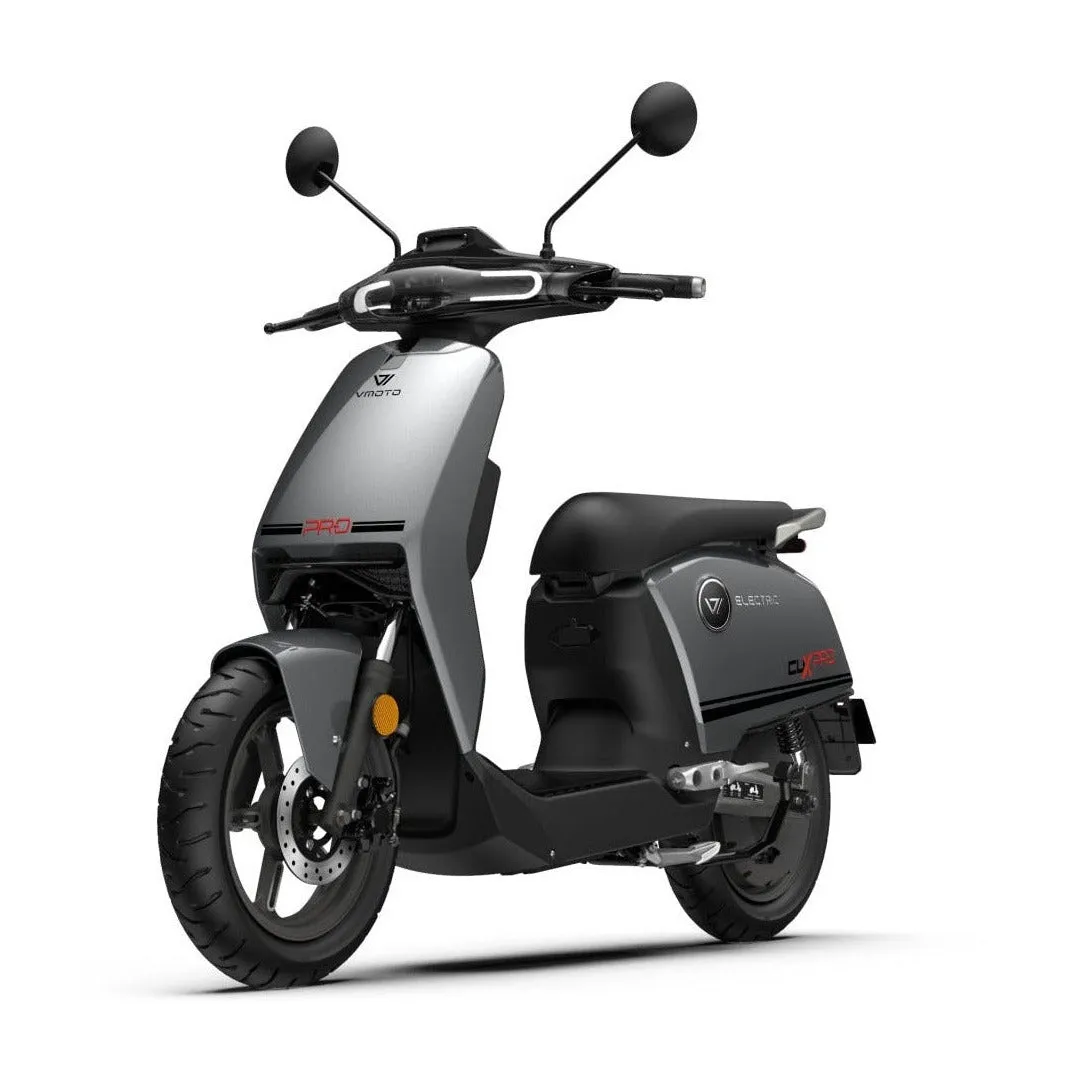
The classic scooter gives you the step-through, the floorboard and storage under the seat: practical for a helmet, the shopping and everyday life. The moped bike gives you the motorcycle silhouette: dummy tank, stretched riding position, legs against the frame. It puts you in a more active position, reads more grown-up — and costs you the storage.
Both stand side by side in our showroom. Thirty seconds in the saddle settles it faster than any table.
Compare
Every 45 km/h machine side by side.
The numbers narrow the class down; the “what it's for” column is what decides. Inside one class the figures sit so close together that character picks the bike, not the decimal.
Swipe the table sideways for speed, range and price.
| Model | What it's for | Top speed | Range | Price |
|---|
| Vmoto CU 72V | City scooterShort city trips, tight parking, the lowest entry price. | 45 km/h | approx. 62 km | €1,799 |
|---|
| Vmoto TC 72V | Café racerMotorcycle feeling on a car licence — for anyone who does not want to read as a scooter. | 45 km/h | - 1 battery · 24 Ahapprox. 75 km
- 2 batteries · 2×24 Ahapprox. 103 km
| from €2,499 |
|---|
| Vmoto TSX 72V | Naked bikeEdgy streetfighter looks, sporty riding position, a younger audience. | 45 km/h | - 1 battery · 24 Ahapprox. 75 km
- 2 batteries · 2×24 Ahapprox. 103 km
| from €2,499 |
|---|
| Super Soco CUX Pro | Lightweight scooterThe featherweight of the line-up — nimble, elegant, effortless to manoeuvre. | 45 km/h | approx. 80 km | €2,599 |
|---|
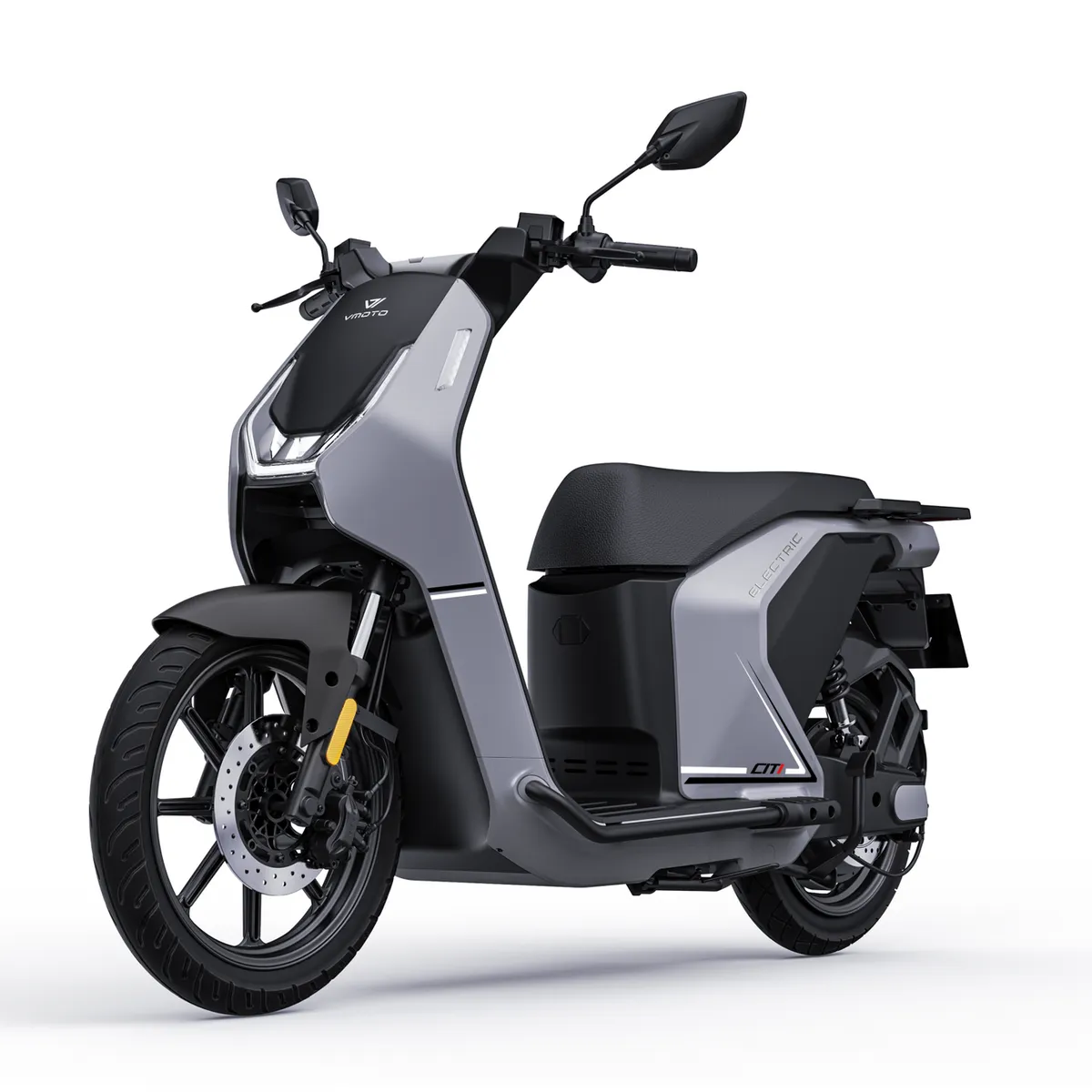
| Vmoto CITI 74V | Everyday scooterRemovable battery, storage, room for a second pack — the commuter of the scooters. | 45 km/h | - 1 battery · 30 Ahapprox. 60 km
- 2 batteries · 2×30 Ahapprox. 127 km
| from €2,999 |
|---|
All prices are recommended retail prices incl. 19% VAT, plus delivery. Ranges are manufacturer figures and depend on riding style, load and temperature.
Licence
Your car licence is enough. No add-on, no exam.
This class asks nothing extra of you. Licence class AM is automatically included in class B — and in A1, A2 and A. If you hold a car licence you may ride every vehicle on this page: no extra exam, no course, no waiting.
Without a car licence, a standalone AM licence works from age 16.
And if more should follow later: German code 196 additionally opens the 125 class — 13.5 hours of training, no exam, from age 25 with at least five years of class B. Not a requirement and not a barrier, simply a door that stands open.
Everything about code 196 →